0%

In 2026, reducing logistics costs will require more than negotiating cheaper freight rates. Import Export Logistics is becoming a data-driven discipline, shaped by fuel prices, port congestion, inventory risks, and changing customer expectations. A shipment can lose margin quickly through demurrage, storage fees, inaccurate documents, or an avoidable empty return.

Martin Christopher, a respected supply chain scholar and author of Logistics & Supply Chain Management, wrote: “Supply chain management is the management of upstream and downstream relationships with suppliers and customers to deliver superior customer value at less cost to the supply chain as a whole.” This principle remains highly relevant. Companies should examine the complete journey, from supplier pickup in Shenzhen to final delivery in Rotterdam or Los Angeles. Small delays matter.

Clear Incoterms planning can prevent unexpected charges. Better demand forecasting can reduce excess inventory. Consolidating compatible shipments may lower freight costs, but it can also increase handling time. That trade-off deserves attention. Digital tracking can reveal repeated delays at one warehouse or border crossing. Still, technology alone will not fix weak processes.

This guide explores practical ways to control Import Export Logistics costs in 2026. It considers carrier selection, route design, packaging, customs accuracy, supplier coordination, and inventory placement. The goal is not simply to spend less. It is to create a more reliable flow of goods without compromising safety, compliance, or customer service. Some savings may look attractive on paper, yet fail during peak season. That possibility should remain visible.
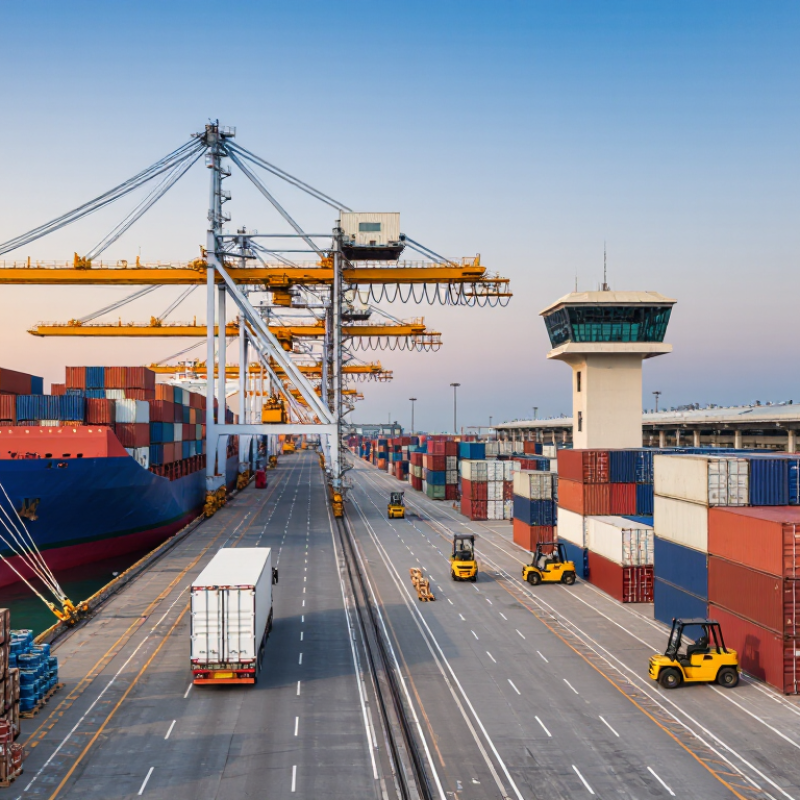
How to Reduce Import Export Logistics Costs in 2026?

Understanding the Main Components of Import and Export Logistics Costs

Understanding the Main Components of Import and Export Logistics Costs

Import and export logistics costs go beyond the freight quote. They can include inland pickup, international transport, terminal handling, insurance, customs brokerage, duties, taxes, and final delivery. Charges vary by route, cargo size, service level, and contract terms. Small shipments may cost more per unit because minimum handling fees still apply.

Timing adds another layer. Storage, equipment use, inspections, and missed cut-off fees can raise costs when cargo waits at a terminal. Warehousing matters when goods sit before dispatch or after arrival. Ask whether a quote includes fuel adjustments, seasonal surcharges, and destination fees. Compare like with like. A low headline rate can become expensive once local charges appear, so the quote alone is not the whole picture.

Tips: Request an itemized quote and confirm who pays each charge. Share accurate weights, dimensions, delivery dates, and cargo details early. Build a reasonable delay buffer, then review actual invoices after each shipment. Track recurring fees by route and shipment type. Keep records. Forecasts still need revision when schedules or port conditions change.

Auditing Shipping Routes, Suppliers, and Packaging for Cost Savings

How to Reduce Import Export Logistics Costs in 2026?

A useful cost audit starts with shipment records, not assumptions. Compare invoices, transit times, fuel surcharges, and port storage charges across the past three months. Rates can mislead. A cheaper route may involve an extra transfer, longer port dwell, or missed delivery windows. Map each route from pickup to final warehouse, then compare total landed cost and on-time performance. Ask carriers for itemized quotes, and check whether seasonal capacity changes affect the lanes you use.

Review suppliers for location, order size, and dispatch consistency. A supplier with a slightly higher unit price may reduce freight costs by shipping fuller containers on a predictable schedule. Small changes matter. Coordinate purchase orders where practical, and track delays or partial shipments in a simple supplier scorecard. Keep the comparison fair: product quality and lead time still count.

Packaging deserves its own inspection. Measure cartons, weigh them, and note how much unused space travels in each shipment. Oversized boxes can increase billed volume, while weak packaging may lead to damaged goods and replacement freight. Test a smaller carton with a sample shipment before changing every order. The first trial may not save much, and that is worth recording too. Compare freight, damage, and handling results over several shipments before settling on a new specification.

Choosing Transport Modes and Consolidation Strategies

Transport choice should match cargo value, urgency, and route reliability—not habit. UNCTAD’s Review of Maritime Transport 2024 reports that shipping carries over 80% of world merchandise trade by volume. For predictable, bulky goods, ocean freight usually offers better unit economics than air. Air makes more sense for compact, high-value cargo or urgent replenishment. The International Air Transport Association estimates that air cargo represents less than 1% of global trade by volume, yet over 35% by value. Fast, but costly. Compare the full landed cost: freight, handling, insurance, storage, and inventory tied up in transit.

Consolidation can reduce per-unit transport costs when several small orders share a container or departure. Set weekly or biweekly cutoffs, align supplier dispatch dates, and group compatible goods at one origin warehouse. Check carton dimensions and pallet heights before booking; a few poorly packed cartons can waste useful space. Still, consolidation is not automatically cheaper. Extra warehouse handling, longer waits, and missed sailings may erase the freight savings. I would protect time-sensitive stock rather than hold every shipment for a fuller container. It is an imperfect trade-off. Compare actual invoices and transit-time records by route, then adjust shipment size and frequency as demand changes.

Reducing Customs Delays, Duties, and Documentation Errors

How to Reduce Import Export Logistics Costs in 2026?

Customs delays often begin before cargo reaches the port. In my experience, small documentation gaps create the largest avoidable costs. A missing product description can trigger inspection, storage fees, and missed delivery appointments. Clear commercial invoices should match packing lists, purchase orders, and transport records. Keep product names specific. Avoid vague terms such as “parts” or “samples.” Confirm quantities, weights, origins, and tariff classifications before submission.

Duties also require careful preparation. Review classification decisions against current customs guidance and keep written evidence for each choice. Country-of-origin records should reflect the actual manufacturing process, not simply the shipping location. Preferential duty claims need supporting certificates and consistent supplier information. One unchecked assumption can affect an entire shipment. That is expensive.

Digital document checks can reduce errors, but they are not perfect. A human review should compare scanned files with the physical cargo. I once saw a packing list use kilograms while the warehouse system recorded pounds. The error looked minor. It caused a customs query and delayed release. Build a pre-clearance checklist with two reviewers, especially for high-value shipments. Track rejection reasons, response times, and recurring data errors each month. Do not hide weak results. They show where training and process changes are needed.

How to Reduce Import Export Logistics Costs in 2026? - Reducing Customs Delays, Duties, and Documentation Errors

Cost or Delay Driver Practical Action Data to Check Illustrative Calculation or Measure Control to Prevent Errors
Incorrect tariff classification Review the product’s characteristics and applicable tariff schedule before booking. Confirm the classification with a qualified customs professional when the product is complex or the classification is uncertain. Product material, function, technical specifications, country of import, and tariff code For a customs value of $20,000, a 5% duty rate would produce $1,000 in duty. The actual rate depends on the product, origin, destination, and current rules. Keep classification rationale and supporting product specifications on file; review codes when products or regulations change.
Incorrect customs valuation Reconcile the declared customs value with the commercial invoice and the valuation rules of the importing country. Identify any required additions or exclusions before submission. Invoice price, currency, freight, insurance, assists, royalties, and applicable valuation adjustments A 5% duty rate applied to a $1,000 valuation error changes the duty calculation by $50, before any tax or penalty implications. Use a documented valuation checklist and retain invoices, payment records, and supporting calculations.
Missed preferential duty treatment Check whether the goods qualify under an applicable trade agreement and whether its origin requirements and proof-of-origin rules are met. Product-specific origin rule, production records, material sourcing, and required origin evidence Potential duty reduction equals the difference between the applicable standard and preferential rates multiplied by the eligible customs value. Eligibility must be confirmed before claiming a preference. Do not claim preferential treatment based only on the shipping country; retain origin records and required declarations or certificates.
Incomplete or inconsistent shipment documents Match the commercial invoice, packing list, transport document, and customs entry before cargo dispatch. Consignee, goods description, package count, weights, values, currency, and shipping terms Track the percentage of entries requiring correction: corrected entries ÷ total entries × 100. Use one approved shipment-data source and a pre-departure document review with named owners.
Customs examination or clearance hold Submit complete, consistent data promptly and respond to customs or broker requests with supporting records. Entry submission time, release time, examination notices, missing-document requests, and hold reason Measure clearance time as customs release timestamp minus entry submission timestamp; compare like-for-like lanes and shipment types. Maintain an escalation contact list and keep product, origin, valuation, and permit documents readily accessible.
Demurrage, detention, or storage charges Coordinate customs release, terminal availability, truck or rail capacity, and equipment return before free time expires. Free-time expiry, customs release, pickup appointment, gate-out, and equipment-return timestamps Potential avoidable charge = chargeable days × the applicable daily rate. Rates and free time vary by carrier, terminal, location, and contract. Set alerts ahead of free-time expiry and assign responsibility for each shipment milestone.
Expedited freight caused by poor planning Forecast demand earlier, consolidate compatible shipments, and select a transport mode based on required delivery time and total landed cost. Forecast accuracy, shipment size, planned lead time, actual transit time, and mode cost Compare total landed cost by mode, including freight, insurance, duties, handling, and inventory carrying costs—not freight alone. Set shipment cut-off dates and review exceptions before upgrading a shipment to a faster mode.
Brokerage and avoidable entry rework Agree on service scope, data requirements, filing deadlines, and correction procedures with the customs broker. Broker fees, entry volume, correction count, response time, and out-of-scope charges Average brokerage cost per entry = total brokerage charges ÷ number of entries, using the same fee categories for each period. Review invoices against the agreed fee schedule and resolve recurring data issues with the responsible team.
Unplanned taxes, permits, or regulatory requirements Check destination-country requirements before purchase order release, including product-specific permits, taxes, and admissibility rules. Product type, destination, importer status, permits, tax treatment, and effective dates of rules Build a landed-cost estimate that separately identifies freight, duty, taxes, brokerage, and other applicable charges. Validate requirements against current official guidance or a qualified adviser before shipping; do not assume requirements are identical across countries.

Note: The numerical duty example is illustrative, not a guaranteed rate or savings estimate. Duty rates, customs valuation rules, documentation requirements, fees, and clearance times depend on the product, origin, destination, shipment facts, and rules in force at the time of import.

Tracking Logistics Performance and Adapting to 2026 Market Changes

Tracking logistics performance requires more than comparing freight invoices at month-end. Teams should measure cost per shipment, on-time delivery, damage rates, and customs-hold days. Separate transport, storage, fuel surcharges, and accessorial fees to reveal where costs actually rise. A spreadsheet can work initially, but inconsistent timestamps quickly weaken its value. Small gaps matter. Review lane-level results weekly, especially when ports become congested or carrier capacity tightens. Use a simple dashboard showing planned versus actual transit times and total landed cost. Assign someone to check missing data before decisions are made. Data is rarely perfect.

In 2026, changing demand, weather disruptions, and fuel volatility may shift the best route within days. Build flexibility into contracts and maintain a qualified backup route for critical shipments. Test scenarios, such as a three-day port delay, against inventory levels and customer commitments. Then compare rerouting costs with the cost of holding extra stock. Plans still fail. Treat that as useful feedback, not a reason to hide the variance. After each disruption, record what changed, what the response cost, and whether the estimate was realistic. Reviewing these notes with finance and operations can expose avoidable fees, though it will not eliminate uncertainty.

FAQS

How should a business choose between ocean and air freight?

Match the mode to cargo value, urgency, and route reliability. Ocean freight often suits bulky, predictable goods. Air can work better for compact, high-value cargo or urgent replenishment. Compare the full landed cost, including storage and inventory tied up in transit.

When does shipment consolidation make sense?

It can lower per-unit costs when smaller orders share a container or departure. Align supplier dispatch dates and group compatible goods at one warehouse. Check carton sizes and pallet heights before booking.

Can consolidation increase costs instead?

Yes. Extra handling, longer waits, or a missed sailing can erase freight savings. Protect time-sensitive stock rather than holding every shipment for a fuller container. The trade-off may not be perfect.

Which logistics metrics should teams track?

Track cost per shipment, on-time delivery, damage rates, and customs-hold days. Separate freight, storage, fuel surcharges, and additional fees to see where costs rise.

Is a spreadsheet enough for logistics tracking?

It can work at first. But inconsistent timestamps weaken comparisons quickly. A simple dashboard can show planned versus actual transit times and total landed cost.

How often should teams review route performance?

Review results by route each week, especially during port congestion or capacity changes. Assign someone to check missing data before decisions are made.

How can a company prepare for 2026 disruptions?

Keep flexible contract terms and qualify a backup route for critical shipments. Test scenarios, such as a three-day port delay, against inventory and customer commitments.

Should a business reroute shipments or hold more stock?

Compare rerouting costs with the cost of extra inventory. The best choice can change with demand, weather, or fuel prices. Plans still fail sometimes.

What should teams do after a logistics disruption?

Record what changed, the response cost, and whether estimates were realistic. Review the notes with finance and operations. The data may be imperfect, but it can reveal avoidable fees.

Conclusion

Reducing Import Export Logistics costs in 2026 starts with understanding where the money goes. Businesses should review freight charges, warehousing, insurance, customs-related expenses, and handling fees to identify the largest cost drivers. Regular audits of shipping routes, suppliers, and packaging can reveal opportunities to shorten journeys, negotiate more suitable service terms, and reduce unnecessary weight or volume without compromising product protection.

The right transport mode depends on delivery deadlines, shipment size, and budget. Combining compatible shipments can improve capacity use, while careful planning helps avoid avoidable customs delays, duties, and documentation errors. Tracking delivery times, damage rates, total costs, and other performance measures makes it easier to spot problems and adjust plans as market conditions change. A consistent review process helps companies make informed decisions and keep logistics spending under control throughout 2026.


Julian

Julian

Julian is a dedicated marketing professional with a deep understanding of the company’s products, market dynamics, and customer needs. Through thoughtful strategy, clear communication, and a strong commitment to continuous learning, he helps translate complex product capabilities into practical......