Explore our industrial-grade cold storage units, reefer container solutions, multi-axle heavy transport chassis, and certified Saudi DDP customs-cleared logistics services tailored for global buyers.




The global cold chain storage market is undergoing a structural transformation driven by stringent pharmaceutical compliance (GDP/GMP), shifting dietary patterns toward fresh perishable foods, and booming cross-border e-commerce in fresh produce. China has emerged as the global epicenter for manufacturing high-efficiency wholesale cold chain storage equipment, ranging from modular Polyurethane/Polyisocyanurate (PU/PIR) cold room sandwich panels to automated refrigerated warehouses, ISO reefer containers, and solar-assisted walk-in freezers.
However, procuring industrial cold chain hardware from China factories involves complex technical parameters, environmental thermal transfer considerations, refrigerant regulatory compliance (such as F-Gas regulations and low-GWP transitions), and seamless international logistics execution. A breakdown at any point in the cold chain—whether due to thermal bridging in room insulation or customs clearance delays at receiving ports like Dammam or Jeddah—can cause complete thermal compromise, leading to catastrophic inventory loss.
Headquartered in Dammam, Saudi Arabia, with primary export consolidating hubs in Shenzhen, Yiwu, Guangzhou, and Ningbo, we bridges factory-floor cold chain production with fully compliant global door-to-door delivery.
With official Saudi Customs approval and deep expertise across Dammam, Jeddah Islam Port, and King Abdulaziz Port, we handle complex DDP clearance, SASO/SABER certification verification, and duty payments seamlessly.
Our partner factories utilize high-density PIR/PUR injection core panels (42kg/m³) featuring Cam-Lock interlocking systems, delivering thermal conductivity as low as λ=0.018 W/m·K for deep-freeze storage (-35°C to -60°C).
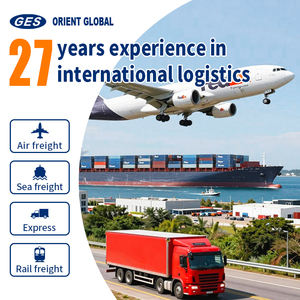
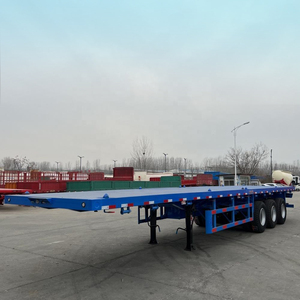
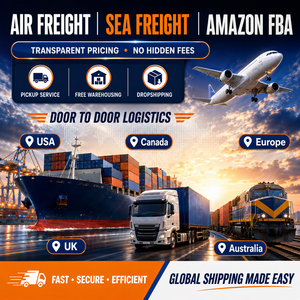
Operating over 140 owned heavy vehicles, 3-axle flatbed trailers, and active reefer fleets, we execute flawless door-to-door (DDP), LCL sea consolidation, and express air freight from China factories straight to project sites.
Real-time IoT cloud monitoring tracks continuous ambient temperatures, humidity levels, GPS positioning, and compressor operating status across ocean transit and inland road cartage.
From 20FT/40FT ISO standard containerized mobile cold rooms to blast freezers equipped with Bitzer, Copeland, or Danfoss compressors, equipment is customized for harsh desert or tropical ambient conditions (up to +55°C).
With 15 regional office locations spanning 110+ countries, we offer interim bonded warehousing, consolidated staging, and professional industrial packaging and re-packaging services.
The Chinese cold storage machinery sector has rapidly evolved from low-cost assembly to world-class precision engineering. Driven by national green initiatives and strict international refrigeration mandates, Chinese factories are pioneering major technological breakthroughs:
In response to global Kigali Amendment enforcement and EU F-Gas restrictions, top Chinese cold storage manufacturers have shifted away from high Global Warming Potential (GWP) R404A and R22 refrigerants. Contemporary wholesale units are designed around eco-efficient synthetic alternatives like R448A/R449A, as well as natural refrigerant systems incorporating R290 (Propane) and CO2 (R744) transcritical booster systems. These systems achieve superior COP (Coefficient of Performance) while ensuring future-proof regulatory compliance.
Modern China cold room panels have moved beyond standard EPS (Expanded Polystyrene) to high-density B1/B2 fire-rated PIR (Polyisocyanurate) and Vacuum Insulation Panels (VIP). Utilizing structural zero-ODP pentane blowing agents, these panels resist thermal bridging, reduce refrigeration compressor runtimes by up to 28%, and maintain structural integrity against high humidity and salt-spray corrosion in coastal logistics hubs.
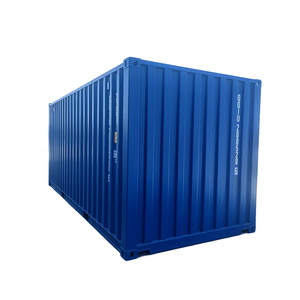
To satisfy rapid deployment demands in agricultural collection hubs, mining sites, and pharmaceutical field clinics, Chinese exporters are standardizing containerized cold rooms built directly inside ISO 20FT and 40FT high-cube shipping containers. Certified by classification societies such as ABS, CCS, BV, and LR, these mobile units integrate generator back-ups, variable frequency drive (VFD) condensing units, and smart touch-screen microcontrollers.
Traditional electric defrost cycles generate unwanted heat spikes inside cold storage units. Leading manufacturers now incorporate machine-learning defrost algorithms that monitor evaporator coil frost buildup via optical and pressure differential sensors. Combined with DC inverter scroll and screw compressors, power consumption is dynamically throttled based on real-time thermal load.
Enterprise buyers, logistics contractors, and pharmaceutical distributors must align their procurement strategies with emerging global regulatory, technological, and environmental benchmarks.
Rising electricity costs and unstable power grids in developing regions (Africa, South Asia, Latin America) have sparked massive demand for hybrid solar-PV cold storage warehouses. Future factory procurement contracts increasingly specify integrated thermal energy storage (TES) utilizing Phase Change Materials (PCM) that lock in cold temperatures for 24+ hours without grid electricity.
Wholesale buyers are shifting away from single-temperature warehouses toward highly flexible, dual-zone or triple-zone modular cold facilities (-25°C freezing, +2°C to +8°C chilling, +15°C controlled atmosphere) equipped with movable thermal curtains and dual evaporator circuits.
Global supply chain compliance now mandates scope 1, 2, and 3 emissions reporting. Procurement officers prioritize China factories that provide complete Life Cycle Assessments (LCA) of equipment, utilizing recyclable steel skins, zero-GWP blowing agents, and high-efficiency compressors.
To eliminate human labor exposure in sub-zero environments, high-capacity cold facilities are specifying automated storage and retrieval systems (AS/RS). This requires factory precision in panel tolerances, rack-supported structure engineering, and automated high-speed insulated roll-up doors.
Small and medium enterprises (SMEs) are increasingly utilizing LCL (Less than Container Load) cold chain consolidation. Freight forwarders providing specialized reefer LCL services with guaranteed door-to-door DDP clearance are taking market share from traditional full-container-only brokers.
| Feature Technical Parameter | Standard Domestic Factory Specification | Export-Grade Advanced Solution (Bluemax Partner Standard) |
|---|---|---|
| Insulation Core Material | Standard EPS or Low-Density PUR (35 kg/m³) | High-Density PIR Flame-Retardant B1 Core (42-45 kg/m³) |
| Thermal Conductivity (λ) | 0.024 - 0.030 W/m·K | 0.018 - 0.021 W/m·K (Maximum Energy Saving) |
| Compressor Brand & Tech | Local OEM Reciprocating Compressor | Bitzer / Copeland / Danfoss Inverter Scroll or Screw |
| Refrigerant Eco-Rating | R22 / R404A (High GWP) | R448A / R449A / R290 / CO2 Transcritical (Low GWP) |
| Panel Interlocking System | Tongue & Groove Friction Fit | Eccentric Zinc-Plated Steel Cam-Lock System |
| Customs & Freight Clearance | FOB Factory Port Only (Buyer Handles Clearance) | End-to-End Saudi Customs Approved DDP Door-to-Door Service |
Get expert answers to critical technical, customs, thermal engineering, and shipping questions when sourcing cold chain equipment from China.
Panel thickness selection depends directly on the internal target temperature and regional ambient extreme temperature. As an engineering rule of thumb:
• 50mm - 75mm: Processing rooms / Chillers (+10°C to +5°C)
• 100mm: Medium-temperature cold storage (+2°C to -5°C)
• 150mm: Deep-freeze storage (-18°C to -25°C)
• 200mm+: Quick blast freezers (-35°C to -45°C) operating in high ambient environments (e.g., Middle East ambient temperatures exceeding +50°C).
For smooth customs clearance at Saudi ports (Dammam, Jeddah, King Abdulaziz Port), equipment must comply with Saudi Standards, Metrology and Quality Organization (SASO) rules. Required documents include: SABER Product & Shipment Conformity Certificates, Commercial Invoice, Bill of Lading, Certificate of Origin (attested), Packing List, and SASO Energy Efficiency Registration (for refrigeration condensing units). Bluemax Cargo Co. manages all SABER filings and DDP duty clearance directly.
Yes. Modular panelized cold rooms are flat-packed onto steel pallets, protected by protective PE films, and shipped securely via standard LCL (Less than Container Load) sea freight or dry 40FT High Cube containers. For fully assembled mobile reefer container units, shipping is handled via FCL ISO flat-rack or dedicated SOC (Shipper Owned Container) reefer slots.
Cam-Locks are corrosion-resistant eccentric steel hooks embedded inside the high-density polyurethane core during factory high-pressure foaming. When assembled on site with an Allen key, the Cam-Locks draw adjacent panels together with massive tension, compressing the tongue-and-groove joint and PVC gaskets. This tight seal prevents air infiltration, eliminates moisture ingress, and completely stops thermal bridging.
In freezers operating below 0°C, cold migrates downward through the floor slab into the underlying soil. Over time, soil moisture freezes, expands, and uplifts the concrete slab (frost heave). To prevent this, China factory export designs include sub-floor ventilation pipes, electric floor heating mats, or extruded polystyrene (XPS) under-floor insulation beneath a reinforced concrete wear slab.
Shipments are equipped with real-time 4G/5G IoT dataloggers that continuously transmit air supply temperature, return air temperature, relative humidity, door sensor status, and GPS coordinates to a central cloud dashboard. In the event of a temperature deviation outside set thresholds, automated SMS/email alerts trigger proactive intervention at regional port hubs.
Export-grade cold chain equipment carries a standard 12-to-36-month global warranty on major mechanical components (compressors, expansion valves, evaporators) and 10+ years structural warranty on PIR panels. Essential spare parts kits (solenoid valves, digital controllers, pressure switches, thermal expansion valves) are packed directly with initial equipment shipments.
Under FOB or CIF terms, the buyer bears full responsibility and financial exposure for unexpected destination port demurrage, customs inspections, tariff classification disputes, and inland transit risks. With DDP services provided by Bluemax Cargo Co., the seller and freight partner handle all customs tariffs, port clearance fee structures, and final off-loading delivery under a single fixed-rate invoice.