Engineered ocean shipping services directly connecting global manufacturing hubs with major Colombian maritime gateways including Buenaventura, Cartagena, Santa Marta, and Barranquilla.
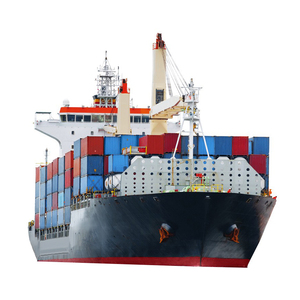
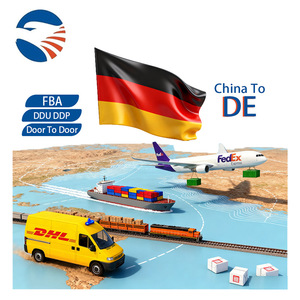
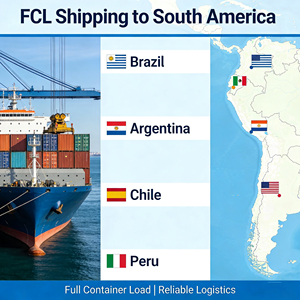
Navigating maritime logistics to Colombia requires an acute understanding of Latin American port dynamics, complex topography, and stringent customs mandates enforced by the Dirección de Impuestos y Aduanas Nacionales (DIAN). As a premier custom OEM port-to-port freight supplier and international exporter with over 25 years of global operational experience, we provide foreign manufacturers and Colombian enterprise importers with bespoke freight forwarding architecture designed for maximum reliability and cost control.
Our OEM port-to-port services transcend standardized shipping schedules. We engineer customized cargo solutions tailored to specific commodity requirements—ranging from heavy industrial machinery destined for Medellín and Bogotá to retail consumer goods entering through Cartagena or raw industrial materials processed via Buenaventura.
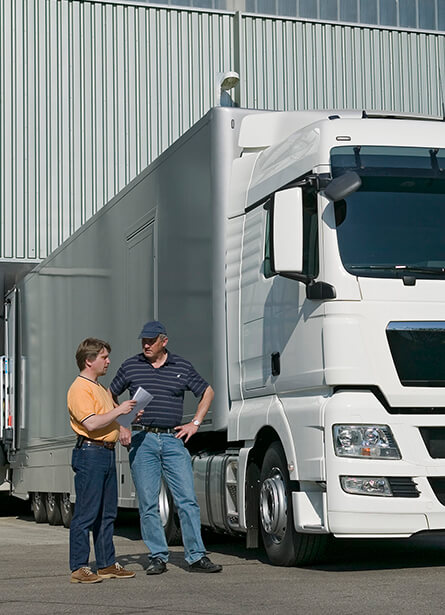
Understanding Colombia's dual-ocean gateway geography to optimize port selection, transit timelines, and regional inland transport distribution.
Primary Served Regions: Bogotá D.C., Cali (Valle del Cauca), Medellín (Antioquia), and the Coffee Axis (Eje Cafetero).
As Colombia's most critical Pacific terminal, Buenaventura handles over 60% of all incoming containerized ocean imports originating from Trans-Pacific shipping lanes. Our OEM port-to-port framework guarantees reserved vessel space with top-tier carrier alliances, managing high-density FCL shipments. We coordinate pre-cleared port documentation to navigate the congestion typical of the Pacific corridor, facilitating immediate dispatch onto truck carriers taking the Ruta Nacional 40 across the Andes to Central Colombia.
Primary Served Regions: Atlantic Industrial Zone, Zona Franca de Cartagena, and Central Inland Connections.
Cartagena stands as one of Latin America's primary transshipment hubs. Featuring world-class terminal infrastructure at SPRC and Contecar, it is ideal for high-value manufacturing components, automotive sub-assemblies, and retail cargo. Our OEM shipping protocols leverage Cartagena’s Free Trade Zones (Zona Franca), allowing Colombian importers to store goods, perform localized assembly or re-packaging, and defer import duties under DIAN regulations until domestic release.
Primary Served Regions: Northern Colombia, Santander industrial hub (Bucaramanga), and agricultural sectors.
Renowned for its naturally deep draft waters, Santa Marta is the premier port for breakbulk, heavy industrial machinery, and specialized project cargo. Our OEM port-to-port engineering handles out-of-gauge (OOG) containerized loads, heavy-lift equipment for infrastructure projects, and temperature-sensitive reefer containers utilizing advanced VCI moisture protection during ocean transit.
Primary Served Regions: Magdalena River Logistics Axis, Barranquilla Industrial District.
Situated at the mouth of the Magdalena River, Barranquilla provides unique access to inland water transportation. Our OEM export solutions orchestrate containerized and breakbulk transfers directly from ocean-going vessels onto river barges or local chassis fleets, supporting heavy industry, chemical manufacturing, and civil engineering projects along the river basin.
A primary bottleneck in Colombian logistics is navigating cargo over the Western, Central, and Eastern ranges of the Andes (Cordilleras). OEM Port-to-Port solutions from experienced suppliers account for weight restrictions, container floor reinforcement, and anti-shock packaging required for heavy truck transits from Buenaventura or Cartagena to high-altitude urban centers like Bogotá (2,640m elevation). We work closely with Colombian transport networks to ensure that containerized goods arriving at port are seamlessly formatted for mountain roadway compliance.
Key economic shifts, regulatory evolutions, and infrastructure developments shaping the import-export landscape in Colombia.
Multinational corporations are increasingly selecting Colombia as a strategic Latin American hub due to its geographic proximity to North America and favorable bilateral trade agreements. This shift has driven massive demand for OEM port-to-port freight customized to raw material imports and semi-finished product exports.
Colombia's customs authority (DIAN) has digitized import declarations and tariff categorization. Importers now require pre-arrival documentation verification, electronic B/Ls, and precise Harmonized System (HS) code matching to avoid costly port demurrages and inspection delays at terminals.
Colombian environmental standards now prioritize sustainable freight practices. Modern shippers are demanding vessel scheduling on low-emission container ships, optimized route planning, and eco-friendly recyclable industrial packaging materials to meet corporate ESG targets.
Colombia’s massive multi-billion-dollar Fourth and Fifth Generation (4G/5G) infrastructure projects are expanding highway tunnels and bridge networks (such as the Túnel de La Línea). This dramatically reduces transit times from Buenaventura to Bogotá, making ocean-to-inland port logistics significantly faster.
With over 100 designated Free Trade Zones across Colombia, enterprise buyers heavily utilize port-to-port freight to move raw goods into tax-exempt zones. OEM freight suppliers providing transparent port custody transfers empower buyers to optimize working capital and defer customs duty payments legally.
Due to historical security considerations, international ocean shipping into Colombia strictly requires Business Alliance for Secure Commerce (BASC) and Authorized Economic Operator (AEO) protocols. Safe port-to-port operations require secure container seals (ISO 17712) and real-time GPS tracking.
Leveraging 25 years of international logistics mastery, operational control, and bespoke engineering to protect your supply chain margin.
Operating as a specialized OEM Port-to-Port Supplier & Exporter means we do not offer cookie-cutter logistics. We build customized ocean freight contracts tailored to your exact manufacturing rhythms, inventory turnover schedules, and budget constraints.
With over 140 owned vehicles, specialized trailer chassis, and contracted port equipment, we handle pre-carriage consolidation at export origins with total operational authority.
State-of-the-art export storage facilities allowing buyer’s consolidation (LCL to FCL conversion), container loading verification, and weight compliance checks before port gate-in.
Expert processing of Commercial Invoices, Packing Lists, Certificates of Origin (Form A / EUR.1 / FTA forms), Bill of Lading (HBL/MBL), and specialized DIAN pre-clearance filings.
Detailed technical answers addressing common logistical, legal, and operational inquiries from Colombian importers and purchasing managers.
Direct ocean transit times vary depending on the target coastal terminal. Shipments originating from major Asian export hubs (e.g., Shanghai, Shenzhen, Ningbo) to the Pacific Port of Buenaventura typically take 22 to 28 days on direct express services. Transit times to Caribbean ports like Cartagena or Santa Marta range between 28 to 35 days via Panama Canal transshipment or direct Atlantic routings. Our team provides precise sailing schedules and real-time container vessel tracking to keep your production timelines synced.
For buyers seeking total control over inland logistics and customs duties in Colombia, FOB (Free on Board) or CFR/CIF (Cost & Freight / Cost Insurance Freight) at port of discharge are highly recommended. Under CFR/CIF Buenaventura or Cartagena, the OEM exporter manages all export customs, origin handling, and ocean transit. Once the vessel docks, your designated Colombian customs broker takes over DIAN clearance and local chassis transport. For buyers wanting an all-inclusive solution, we also offer complete DDP (Delivered Duty Paid) services.
Port demurrages at Colombian terminals accumulate quickly due to DIAN inspections or documentation errors. To prevent this, we execute rigorous pre-shipment documentation audits—ensuring that Bill of Lading descriptions, HS codes, and commercial values perfectly match your DIAN import declaration. Furthermore, we negotiate extended free-time agreements (typically 14 to 21 days of combined container demurrage and detention) directly with ocean shipping lines prior to vessel departure.
DIAN requires several mandatory documents: the Commercial Invoice (in Spanish or with Spanish translation), Packing List with exact weight/volume specs, Original Bill of Lading (B/L), Import Declaration (Declaración de Importación), Certificate of Origin (to leverage Free Trade Agreement tariff reductions), and, where applicable, mandatory conformity certificates (RETIE for electrical goods, INVIMA for food/health products). Our OEM documentation desk pre-reviews all paperwork prior to port dispatch.
We utilize specialized equipment including Flat Rack containers, Open Top containers, and Breakbulk chartering for out-of-gauge (OOG) industrial equipment. Cargo is secured using high-tensile steel lashing, heavy-duty timber bracing, and anti-corrosive shrink wrapping. For inland transit across mountain corridors from Santa Marta or Buenaventura, we arrange certified low-boy trailers and escort vehicles in full compliance with Colombia’s Ministry of Transport (Ministerio de Transporte) regulations.
The Business Alliance for Secure Commerce (BASC) certification guarantees that international supply chains adhere to strict anti-smuggling and security standards. Partnering with a BASC-compliant OEM supplier ensures that containers are packed in secure facilities, sealed with high-security ISO 17712 bolt seals, and tracked via tamper-evident technology, preventing unauthorized access during ocean transit and accelerating physical inspections by Colombian port authorities.