Certified Door-to-Door (DDP), Customs Clearance, Quality Verification, and Regulatory Test Support engineered for seamless entry into Genoa, Trieste, La Spezia, and Milan logistics hubs.






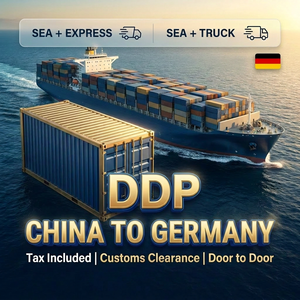
Exporting industrial equipment, raw materials, consumer goods, and textiles into Italy requires a comprehensive understanding of both the European Union’s Union Customs Code (UCC - Regulation EU No 952/2013) and national administrative decrees overseen by the Agenzia delle Dogane e dei Monopoli (ADM). As Italy reinforces its position as the second-largest manufacturing economy in Europe, foreign factories and exporters must navigate tight regulatory enforcement at key gateways including the ports of Genoa, La Spezia, Trieste, Venice, and Gioia Tauro, alongside major air cargo terminals at Milan Malpensa (MXP) and Rome Fiumicino (FCO).
To establish frictionless trade routes, overseas exporters must implement a structured Import Compliance Management System (ICMS). This framework governs tariff classification accuracy (TARIC codes), valuation verification under GATT rules, origin determination (preferential vs. non-preferential), and compliance with mandatory EU safety directives. Failure to adhere to these standard protocols results in severe financial penalties under Article 303 of the Italian Customs Law (TULD - DPR 43/1973), product seizures, or permanent bans from the Single Market.
SEO & Compliance Note: A certified Import Compliance Management Factory ensures that every shipment entering Italy is backed by verifiable technical dossiers, correct EORI-linked declarations, and full adherence to the EU Single Window Environment for Customs.
Every commercial consignment entering the Italian territory requires a robust trail of legal and administrative documentation. The primary document required by ADM is the Single Administrative Document (SAD / Documento Unico Doganale - DAU), filed electronically via the AIDA (Automazione Integrata Dogane Ambulanti) platform. Exporters must ensure their supply chain partner or freight broker manages the following dossier with precision:
| Compliance Document | Primary Regulatory Basis | Issuing Authority / Entity | Required Verification for Italy |
|---|---|---|---|
| Commercial Invoice (Fattura Commerciale) | UCC Art. 145 / GATT Valuation | Exporter / Manufacturer | Must state Incoterms 2020, EORI number, precise currency valuation, and line-item HS/TARIC codes. |
| Single Administrative Document (SAD/DAU) | EU Regulation 952/2013 | Italian Customs Broker / CAD | Electronic declaration filed via ADM Telematizzazione system under specific import procedure codes (e.g., Code 40 00). |
| EU Declaration of Conformity (DoC) | CE Marking Directives (LVD, MD, EMC) | Factory Quality Dept / Notified Body | Mandatory for machinery, electronics, and medical devices. Must be translated into Italian or English. |
| Proof of Origin (EUR.1 / REX Declaration) | EU Bilateral Free Trade Agreements | Customs / Self-Certified (REX) | Required to claim preferential zero-duty or reduced duty rates under relevant EU FTAs. |
| REACH & RoHS Safety Data Sheets (SDS) | EC 1907/2006 & Directive 2011/65/EU | Certified Testing Laboratory | Required for chemicals, polymers, textiles, and electronics to verify SVHC (Substances of Very High Concern) limits. |
Italy’s industrial landscape is highly regionalized, driven by specialized economic districts (Distretti Industriali) that demand specific import compliance workflows depending on the commodity type. Exporters must tailor their quality control, packaging, and regulatory documentation to align with the distinct operational demands of these regional hubs.
The region of Emilia-Romagna (Bologna, Modena, Parma) and Greater Lombardy (Milan, Brescia, Bergamo) represent the pinnacle of European mechanical engineering and packaging machinery manufacturing. Factories supplying raw components, hydraulic assemblies, electric motors, or custom castings to Italian original equipment manufacturers (OEMs) must strictly comply with the EU Machinery Directive 2006/42/EC (transitioning to the new Machinery Regulation EU 2023/1230) and the Low Voltage Directive (2014/35/EU).
Components destined for these regions must include full material traceability certificates (EN 10204 3.1/3.2), clear CE labeling, and complete risk assessment dossiers to prevent assembly line shutdowns or customs holds at the Port of La Spezia.
Supply chains servicing Florence, Prato, Santa Croce sull'Arno, and the Veneto region require stringent compliance regarding chemical safety and raw material sourcing. Exporters of luxury leather, synthetic fabrics, hardware accessories, and dyes must demonstrate full alignment with the EU REACH Regulation, ensuring zero presence of banned azo dyes, heavy metals, or fluorinated chemicals (PFAS).
Furthermore, imports of exotic animal leathers must pass strict CITES (Convention on International Trade in Endangered Species) inspection at specialized Italian customs checkpoints prior to release to luxury fashion houses.
Servicing the automotive cluster around Turin requires adherence to just-in-time (JIT) delivery models paired with IATF 16949 quality standards. Overseas factories providing automotive stampings, electronic control modules, and sensor assemblies must maintain pre-cleared customs status. Utilizing Direct Delivery DDP Air Freight into Milan Malpensa or bonded warehouse storage near Turin guarantees that compliance clearance happens concurrently with transport, bypassing traditional border latency.
The import landscape across Italy is undergoing a profound digital and environmental transformation driven by broader European Green Deal initiatives and modernized customs frameworks. Exporters looking to secure long-term contracts with Italian enterprise buyers must adapt to three major regulatory shifts currently sweeping the market:
Enforced under EU Regulation 2023/956, CBAM targets carbon-intensive imports including steel, aluminum, cement, fertilizers, hydrogen, and electricity. Factories exporting these goods to Italy must report embedded direct and indirect greenhouse gas emissions. Partnering with a compliance-managed exporter ensures accurate emissions data logging to prevent punitive carbon tariffs.
As part of the Ecodesign for Sustainable Products Regulation (ESPR), Italian importers are mandating Digital Product Passports. Exporters must incorporate scannable data carriers (QR codes/RFID) containing verified data on material provenance, repairability, and environmental footprint directly onto product packaging before dispatch.
The Italian customs authority (ADM) is fully sunsetting paper-based filings in favor of interoperable digital platforms. Importers and logistics providers holding Authorized Economic Operator (AEO-F) status enjoy centralized clearance, reduced physical inspection rates, and priority processing across all Italian maritime container terminals.
Leveraging over 25 years of operational excellence in international freight forwarding, customs brokerage, and factory-side quality control (derived from our core heritage at Bluemax Cargo / Delano Logistics), we provide global factories and Italian buyers with an unshakeable trade infrastructure. We bridge the gap between Asian manufacturing hubs and Southern European commercial markets through integrated, risk-managed logistics solutions.
We eliminate fiscal hurdles for Italian buyers by operating structured DDP (Delivered Duty Paid) frameworks. We handle all customs formalities, duty disbursements, and Italian VAT (IVA) compliance under Article 67 of DPR 633/72, allowing buyers to receive goods domestically without administrative burden.
Operating dedicated quality control and inspection teams across primary manufacturing zones (including Hebei, Zhejiang, Guangdong, and South East Asia), we perform rigorous Pre-Shipment Inspections (PSI) to verify CE compliance, physical packaging integrity, and label accuracy before cargo departs.
Whether routing time-critical shipments via express air charter to Milan Malpensa or heavy industrial machinery via FCL sea shipping to Genoa and La Spezia, our global carrier agreements ensure locked-in space allocations, zero container rollings, and optimal freight rates.
From RCM compliance for Australasian markets to CE marking, RoHS, and REACH verification for the European Union, our technical experts coordinate accredited laboratory testing, assemble technical construction files, and ensure zero customs detentions.
Our direct partnerships with registered Italian Customs Assistance Centers (Centro di Assistenza Doganale - CAD) guarantee immediate intervention in the event of customs queries, tariff re-classifications, or physical red-channel (VM) inspections.
Every shipment is tracked via integrated IoT telemetry, providing minute-by-minute updates on vessel positioning, customs release milestones, temperature controls, and final mileage delivery to facilities across all Italian provinces.
Answers to common technical, legal, and operational inquiries regarding trade compliance, customs duties, and freight logistics for imports into Italy.
Connect with our senior trade compliance directors and logistics engineers to receive a tailored tariff audit, custom DDP freight quotation, or comprehensive product catalog for your manufacturing facility.
Get Catalog