
In global trade and freight forwarding, raw factory packaging rarely satisfies the rigorous demands of cross-border multi-modal transport. When goods leave a manufacturing facility, domestic packaging is typically designed for static storage or short-distance point-to-point trucking. However, when cargo is introduced into international supply chains—involving high-humidity ocean containers, extreme atmospheric pressure changes during air freight, and multi-point forklift handlings at port terminals—standard packaging rapidly degrades.
Cargo Re-Packaging is the strategic process of evaluating, reinforcing, repacking, or entirely redesigning product containment to meet international transit safety specifications, ISPM-15 phytosanitary regulations, carrier dimensional guidelines, and destination customs mandates. Industrial cargo re-packaging is not merely about wrapping boxes; it is an engineering discipline combining structural dynamics, moisture prevention barrier technology, volumetric optimization, and regulatory compliance.
For global procurement managers, logistics heads, and enterprise buyers, investing in professional cargo re-packaging yields immediate financial and operational dividends: it reduces physical freight damage claims by up to 94%, slashes air freight billable charges through Volumetric Weight Optimization, and prevents costly customs rejections at major trade gateways such as Dammam's King Abdulaziz Port and King Fahd International Airport.

Over 68% of maritime cargo damage claims stem from insufficient internal cushioning, stack failure, and moisture condensation (container rain). Standard corrugated boxes lose over 60% of their structural compression strength under high relative humidity (above 80%), common in trans-oceanic routes.
By implementing specialized re-packaging protocols before long-haul export, Bluemax Cargo Co. ensures your capital equipment, sensitive electronics, and bulk commodities survive extreme mechanical forces, pitch-and-roll inertia, and environmental fluctuations intact.
Bluemax Cargo Co. provides a modular spectrum of customized industrial packaging and re-packaging services designed for diverse cargo profiles and carrier modalities. Our facility in Dammam, Saudi Arabia, serves as a premier regional hub for cargo consolidation, inspection, and technical repackaging.
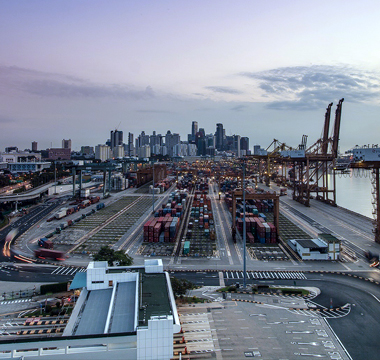
Custom-engineered heat-treated (HT) timber crates, skids, and fully enclosed wooden boxes designed for heavy machinery, turbine parts, and oversized project cargo. Fully compliant with international IPPC phytosanitary standards for seamless cross-border customs clearance.

Advanced Volatile Corrosion Inhibitor (VCI) films and hermetically sealed vacuum aluminum foil barrier bags. Essential for high-value electronics, medical devices, and precision steel components susceptible to oxidation, salt spray, and atmospheric moisture.
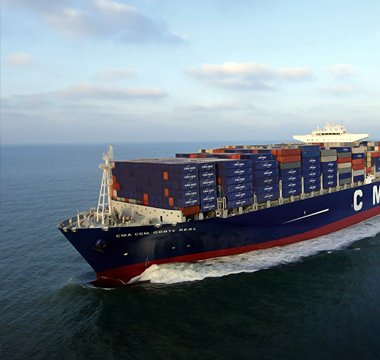
Certified re-packaging for Hazmat classes (chemicals, lithium batteries, flammable liquids) adhering strictly to IATA-DGR (Air), IMDG Code (Sea), and ADR (Road) standards. Complete with certified UN boxes, absorbent lining, and mandatory danger labeling.
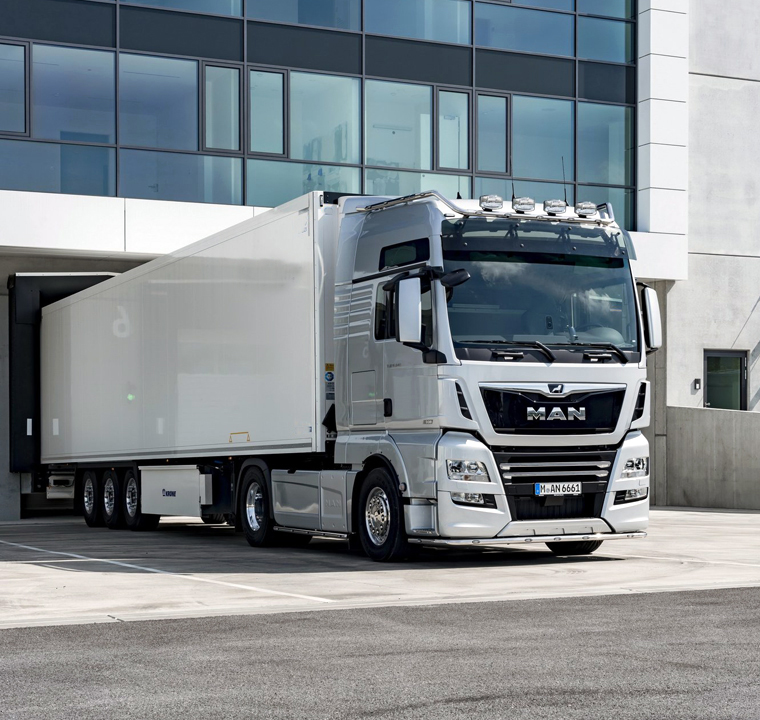
Repackaging oversized, light-density shipments to eliminate excess dimensional weight charges in air and express freight. Up to 35% reduction in billable weight achieved via custom rightsizing, vacuum compression, and high-density pallet stacking.
In air freight shipping, carriers calculate chargeable weight based on either actual gross weight or dimensional (DIM) weight using the standard formula: (Length × Width × Height in cm) / 6000 = DIM Weight in kg. Many overseas suppliers ship items in standardized, cavernous master cartons stuffed with empty air and foam peanuts.
During our Cargo Re-Packaging audit at Bluemax facilities, items are unpacked, re-oriented, and custom-encased using structural corrugated sleeves. By reducing a carton's height by just 10 centimeters across a 500-box consignment, procurement teams save thousands of dollars in billable air freight charges while simultaneously improving box compression strength!
Quality assurance in cargo repackaging is grounded in empirical physics and standardized testing frameworks. Bluemax Cargo Co. applies strict international testing parameters to guarantee that re-packaged goods withstand rigorous logistics operations.
| Packaging Metric / Standard | Technical Description | Supply Chain Benefit |
|---|---|---|
| ISPM-15 Compliance | Heat Treatment (HT) of solid wood packaging to core temperature of 56°C for 30 min. | Prevents pest infestations; guarantees zero customs delays at global entry ports. |
| Edge Crush Test (ECT) | Measures cross-direction compression strength of corrugated board (e.g., 44 ECT to 55 ECT). | Prevents bottom-box collapse during multi-tier warehouse pallet stacking. |
| MIL-STD-2073 / ASTM D3951 | Standard practice for commercial and military preservation and repackaging specifications. | Ensures multi-year shelf-life stability and physical shock mitigation during transit. |
| MVTR (Moisture Vapor Transmission Rate) | Evaluates barrier foil permeability to water vapor (<0.01 g/m²/24h). | Eliminates corrosion, rusting, and electrical shorting risks in tropical shipping corridors. |
| UN Marking Certification | Rigorous drop, leakproofness, hydrostatic, and stacking tests for hazardous materials. | Ensures full compliance with international maritime and aviation dangerous goods laws. |
The global logistics landscape is undergoing a massive transformation driven by sustainability mandates, supply chain digitalization, and regional manufacturing reshuffling. Global procurement leaders must anticipate these key trends when formulating their cargo handling strategies:
Single-use plastics, expanding polystyrene (EPS) foam, and non-recyclable bubble wraps are rapidly being phased out due to stringent environmental regulations (such as the EU's Packaging and Packaging Waste Regulation - PPWR). Modern cargo re-packaging emphasizes bio-based protective cushions, molded pulp corner guards, and recyclable honeycomb paperboard structure. Modern enterprise procurement contracts increasingly mandate 100% recyclable re-packaging protocols at origin hubs.
Re-packaging is no longer purely passive structural defense. Advanced re-packaging incorporates smart IoT sensors directly into timber crates and outer cartons. These sensors log real-time data regarding shock forces (g-force spikes), tilt angles, ambient temperature, relative humidity, and geo-location. If a crate drops or experiences dangerous vibration during intermodal transfer, automated alerts notify stakeholders immediately, facilitating proactive insurance documentation and damage intervention.
3D volumetric optical sensors scan incoming supplier cargo and automatically trigger automated box-cutting machinery to manufacture custom-fit corrugated enclosures down to the exact millimeter. This automated approach eliminates internal void-fill materials, decreases outer packaging volume by up to 40%, and vastly accelerates re-packaging throughput at high-volume freight forwarding terminals.
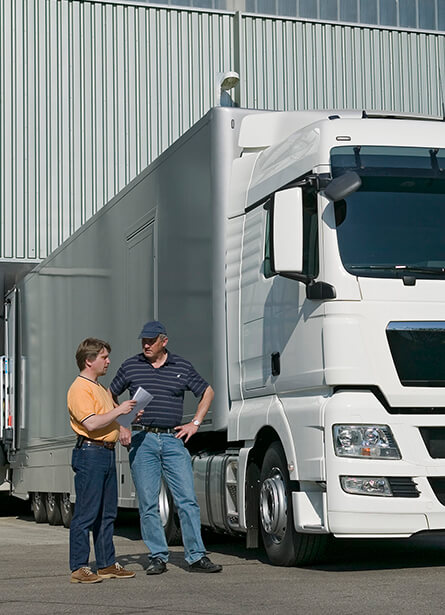
Under Saudi Arabia's Vision 2030, Dammam has emerged as a powerhouse logistics crossroads connecting Asia, Europe, and Africa. Bluemax Cargo Co. offers strategic hub operations where inbound sea freight or air cargo can be received, unbundled, quality-inspected, expertly re-packaged, and redistributed across the GCC and international markets with minimal transit latency.
Historically, cargo re-packaging was performed reactively at destination ports after damage was discovered. Modern supply chain architecture has shifted toward Origin-Hub Re-Packaging. By intercepting freight at key consolidation centers prior to main-leg transport, enterprises achieve three crucial advantages:
Headquartered in Dammam, Saudi Arabia, Bluemax Cargo Co. brings over 25 years of hands-on operational excellence in international freight forwarding, customs clearance, and industrial cargo packaging services. Our strategic advantages empower multinational corporations, EPC contractors, and global buyers to operate resilient supply chains:
Our secure, climate-controlled warehousing facilities in Dammam are equipped with heavy-duty overhead cranes, specialized crating workshops, and automated shrink-wrapping systems for high-throughput cargo repackaging operations.
With an owned fleet of over 140 transport vehicles—including low-bed trailers, container side-loaders, and temperature-controlled trucks—we ensure seamlessly integrated re-packaging and land transport operations across Saudi Arabia and GCC borders.
Our deep local clearance expertise ensures that all re-packaged cargo fully complies with Saudi Customs (ZATCA), GCC customs tariffs, and global import-export documentation requirements, preventing expensive border demurrage.
Below are detailed answers to the most common technical and operational questions posed by global procurement managers, logistics planners, and international buyers regarding cargo re-packaging:
Never allow inadequate packaging to compromise your high-value cargo, delay critical industrial projects, or inflate freight transportation budgets. Bluemax Cargo Co. combines 25+ years of regional logistics leadership, certified packaging engineers, and world-class Dammam infrastructure to deliver complete cargo protection peace of mind.
Contact our technical logistics team today to receive a comprehensive packaging audit, customized crating quote, or complete product catalog.