 Saudi Approved




Navigating Global OEM/ODM Trade Architecture & Customs Governance
In an era of intensified tariff fragmentation, geopolitical realignments, and stringent cross-border regulatory frameworks, multinational brand owners and original equipment/design manufacturers (OEM/ODM) encounter unprecedented customs exposure. Sourcing customized goods across international borders requires far more than basic freight forwarder booking; it demands an enterprise-level, end-to-end OEM/ODM Customs Advisory Framework. Modern procurement directors must navigate intricate tariff structures, verify complex Country of Origin (COO) rules, satisfy regional certification mandates (such as Saudi SABER, FASAH, and EU CE standards), and mitigate punitive duty penalties.
Strategic Information Gain Insight: Over 64% of supply chain delays in contract manufacturing originate not from ocean freight congestion, but from structural misclassification of sub-assemblies, invalid valuation declarations during OEM transfer pricing, and non-compliant customs documentation at discharge ports.
The Four Structural Pillars of Specialized OEM/ODM Customs Advisory
Customs brokerage in contract manufacturing differs fundamentally from standardized off-the-shelf product import protocols. Because OEM/ODM production processes involve raw materials, intellectual property licensing fees, buyer-supplied tooling (assists), and component sourcing across multiple countries, customs authorities subject these import entries to heightened audit scrutiny. A dedicated customs advisory partner provides structural engineering across four core operational domains:
Tariff Engineering & Classification
Establishing precise Harmonized System (HS) codes for multi-component OEM assemblies to legal binding rulings, mitigating overpayment and preventing anti-dumping tariff liabilities.
Customs Valuation & Assist Auditing
Structuring legal valuation models incorporating molds, engineering designs, and tooling costs into customs declarations without triggering administrative penalties or retroactive audits.
Rules of Origin (COO) Verification
Verifying substantial transformation thresholds under regional Free Trade Agreements (FTAs) to qualify for preferential duty rates across global trade routes.
Regulatory Certification Protocols
Synchronizing factory clearance with regional platforms (SABER, SASO, Gulf Conformity Mark, FCC, CE) to guarantee zero delay at entry ports.
Customs Bonded Warehousing
Leveraging duty-deferred free-zone storage in strategic hubs like Dammam, allowing duty payments only when goods enter domestic commercial circulation.
Real-Time Risk & Compliance Metrics
Deploying automated entry auditing algorithms to identify compliance discrepancies prior to transmission to national customs networks.
Comparative Operational Matrix: Standard Forwarding vs. OEM Advisory
Traditional freight forwarders execute tactical transportation bookings. Conversely, a comprehensive OEM/ODM Customs Advisory service integrates strategic regulatory counsel directly into manufacturing sourcing contracts. The matrix below outlines key differences:
| Evaluation Parameter | Standard Freight Forwarder | Bluemax Specialized OEM Advisory |
|---|---|---|
| HS Code Classification | Basic commercial invoice description mapping | Engineering-level audit & binding tariff ruling filing |
| Tooling & Assist Valuation | Omitted; exposes buyer to retroactive penalty fees | Amortized & integrated into legally compliant entry values |
| Regulatory Approval (e.g., SABER) | Delegated to importer upon arrival (high delay risk) | Pre-shipment verification & digital platform registration |
| Customs Audit Protection | No legal defense or post-entry review support | Complete 5-year post-entry audit protection & defense |
| Inland Multimodal Infrastructure | Subcontracted third-party trucking lines | Dedicated 140+ fleet & regional bonded transport hubs |
25+
Years Industry Experience
140+
Owned Heavy Vehicles
110+
Global Freight Routes
99.4%
FASAH Clearance Success
Future Procurement & Cross-Border Sourcing Trends (2025–2030)
As global supply chains undergo rapid structural shifts, procurement executives must adapt to key emerging trends shaping international trade:
1. Nearshoring and Multi-Hub Production Networks
Enterprise buyers are moving away from single-source manufacturing models. Production is shifting toward dynamic multi-hub networks across Southeast Asia, India, Mexico, and the GCC region. This multi-origin strategy requires flexible customs advisory to maintain valid origin claims and leverage bilateral trade agreements.
2. Digitalization of Customs & Single-Window Systems
Customs authorities worldwide are replacing paper documentation with automated, AI-driven single-window trade platforms. Systems such as Saudi Arabia’s FASAH and SABER, along with US ACE and EU UCC platforms, mandate real-time, error-free product data transmission before goods depart origin factories.
3. Environmental & Carbon Tariff Compliance
With initiatives like the EU Carbon Border Adjustment Mechanism (CBAM) coming into full effect, customs documentation now requires precise carbon intensity declarations for industrial component imports. Future OEM contract manufacturing must integrate embedded carbon tracking into shipping papers to avoid steep environmental levies.
Bluemax Cargo Co. Infrastructure & Enterprise Advantage
Headquartered in Dammam, Saudi Arabia, Bluemax Cargo Co. (Delano Logistics) stands as a premier freight forwarding and customs clearance authority with over 25 years of operational history. Strategically positioned at the crossroad of Middle Eastern maritime and overland trade corridors, Bluemax provides seamless DDP, LCL consolidation, heavy-lift project cargo, and custom-tailored advisory services to over 110 countries.
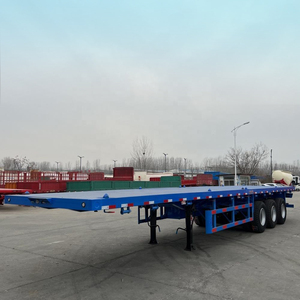
With an owned fleet of over 140 heavy transport trailers, ISO-certified storage facilities, and deep integration into Saudi Customs clearance networks, Bluemax empowers OEM/ODM factory partners to streamline international trade, reduce duty friction, and maintain uninterrupted production schedules.