Below are authoritative answers to critical technical and commercial questions faced by corporate buyers and supply chain directors when selecting a contract logistics partner.
Q1: What is the operational distinction between 3PL and 4PL contract logistics?
A 3PL (Third-Party Logistics) provider focuses primarily on executing physical logistics services—such as warehousing, ocean/air freight forwarding, and truck transportation. A 4PL (Fourth-Party Logistics) provider acts as a strategic supply chain integrator, managing the data, technology, procurement strategy, and performance of multiple 3PL vendors. Bluemax Cargo offers hybrid 3PL/4PL solutions, providing both physical asset ownership (fleet & warehouses) and digital supply chain orchestrations.
Q2: How does DDP (Delivered Duty Paid) protect international buyers from hidden costs?
Under DDP terms, the seller/logistics provider assumes total financial and operational responsibility for the cargo from origin pickup to final destination unloading. This includes paying all export duties, international freight charges, import tariffs, VAT, port handling fees, customs inspection charges, and final-mile door delivery. DDP eliminates unexpected demurrage penalties or surprise local destination charges for the buyer.
Q3: Why is Saudi Customs approval (FASAH compliance) critical for Middle Eastern trade routes?
Saudi Arabia enforces strict import compliance regulations under its SABER and FASAH digital customs systems. A Saudi Customs-approved logistics partner possesses authorized broker credentials, allowing pre-clearance documentation submittal prior to vessel berth. This avoids prolonged customs holds, reduces port dwell times to under 24 hours, and eliminates costly storage fees at major entry points like Dammam Port and Jeddah Islamic Port.
Q4: What is the optimal freight mode for medium-volume cargo: LCL Consolidation or Full Container Load (FCL)?
If your cargo volume ranges between 1 CBM and 15 CBM, Less-than-Container Load (LCL) consolidation is typically most cost-effective, as you only pay for the exact volume consumed. Once cargo volume exceeds 15-18 CBM (roughly half a 20FT container), booking an FCL (Full Container Load) becomes economically superior due to flat container rate structures and reduced risk of cargo handling damage.
Q5: How do multimodal Sea-Air solutions compare to direct Air Freight in terms of transit time and cost?
Multimodal Sea-Air combines the cost benefits of ocean transport with the speed of air freight. On a typical Asia-to-Europe or Asia-to-Americas route, direct Air Freight takes 3–5 days at high rates, while pure Sea Freight takes 30–40 days. Sea-Air routes via Middle Eastern hubs achieve a 12–18 day door-to-door transit time at a cost 40% to 60% lower than standard air cargo services.
Q6: What certifications are mandatory for ISO containers used in international multimodal shipping?
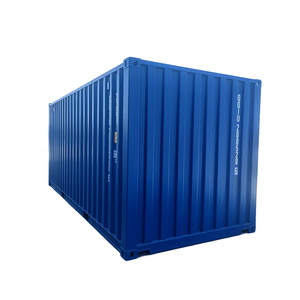
ISO shipping containers must carry a valid CSC (Container Safety Convention) plate and be certified by recognized classification societies such as ABS (American Bureau of Shipping), CCS (China Classification Society), BV (Bureau Veritas), or LR (Lloyd’s Register). These certifications guarantee structural load-bearing strength, weather-tightness, and safety compliance for intermodal rail, road, and maritime transport.
Q7: How does Bluemax Cargo handle heavy-lift industrial and project cargo transportation?
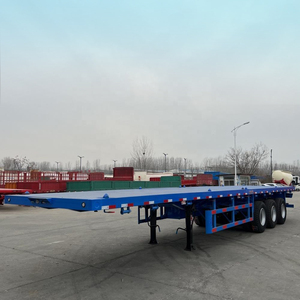
Project cargo logistics involves route surveys, bridge load analysis, police escorts, custom lashing/rigging engineering, and specialized transport equipment (such as multi-axle hydraulic trailers and low-bed heavy haulers). Bluemax Cargo provides end-to-end project management, ensuring over-dimensional machinery and industrial components are safely transported from sea ports to remote installation sites.
Q8: What steps should enterprise procurement take to request an accurate Contract Logistics proposal?
To receive an optimized quote, buyers should provide: (1) Origin and destination zip codes, (2) Cargo dimensions, gross weight, and commodity HS codes, (3) Preferred Incoterm (e.g., DDP, FOB, DAP), (4) Special handling needs (temperature control, hazardous material certificates, heavy lifting), and (5) Expected shipment frequency or project timeline.