Seamless Door-to-Door DDP Shipping, Multimodal Transport, and Certified Cargo Containment Units Fully Covered by Marine Risk Portfolios


International trade between global manufacturing hubs—such as China, Saudi Arabia, the Middle East, Europe, and North America—and the Philippine archipelago presents a unique nexus of oceanic, atmospheric, and regulatory challenges. Navigating the South China Sea, the Luzon Strait, and the inter-island waterways of the Visayas and Mindanao requires far more than standard carrier bill-of-lading liability. For manufacturing factories, international trade houses, and B2B exporters, securing comprehensive Cargo Insurance Coverage for shipments serving the Philippines is an absolute operational necessity.
As global supply chains expand under multimodal Door-to-Door (DDP) frameworks, factories exporting to major Philippine ports—including Manila International Container Terminal (MICT), South Harbor, Batangas Container Terminal, Subic Bay Freeport Zone, and Cebu International Port—must align their marine insurance policies with the statutory requirements enforced by the Philippine Bureau of Customs (BOC) and the Customs Modernization and Tariff Act (CMTA / Republic Act No. 10863).
Structuring the correct financial protection requires selecting the appropriate standard clauses formulated by the International Underwriting Association (IUA) and the Institute of London Underwriters (ILU). Below is a direct legal and risk coverage matrix designed for factories shipping heavy equipment, dry cargo, and consolidated LCL freight into the Philippines:
| Coverage Parameter | Institute Cargo Clauses (A) | Institute Cargo Clauses (B) | Institute Cargo Clauses (C) |
|---|---|---|---|
| Scope of Risk | All Risk (Unless specifically excluded) | Named Perils (Intermediate coverage) | Major Maritime Disasters Only |
| Typhoon & Heavy Weather Damage | Fully Covered | Covered (Washing overboard/water ingress) | Excluded |
| General Average & Salvage Charges | Covered | Covered | Covered |
| Jettison & Washing Overboard | Covered | Covered | Jettison Only Covered |
| Theft, Pilferage & Non-Delivery (TPND) | Covered | Excluded (Requires Rider) | Excluded |
| Ideal Export Commodities | Semiconductors, Solar Panels, Consumer Goods | Building Materials, Bulk Grains, Polymers | Scrap Metals, Raw Ore, Heavy Steel Structures |
The Philippines' geography—comprising over 7,000 islands—mandates complex intermodal supply chains. Cargo entering Manila often undergoes secondary transit via Ro-Ro (Roll-on/Roll-off) vessels or coastal barges to reach regional manufacturing zones in Laguna, Cavite, Batangas, Clark, and Davao. Each transit leg introduces specific hazard vectors that factories and freight forwarders must mitigate.
Exporters serving automotive assembly plants and electronic manufacturing services (EMS) in PEZA (Philippine Economic Zone Authority) industrial parks require zero-gap ICC (A) coverage. Protection includes inland transit risks against road accidents, container tipping, and monsoon flooding along the South Luzon Expressway (SLEX).
Transferring breakbulk machinery and ISO dry cargo containers from primary hubs like Manila North Harbor to Visayan ports (Cebu, Iloilo, Bacolod) involves high maritime hazard exposure. Policy riders must encompass General Average contributions resulting from vessel grounding or machinery breakdown during inter-island navigation.
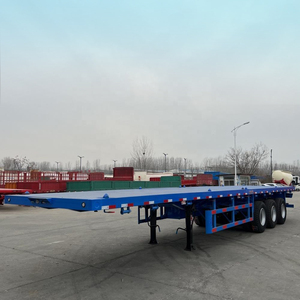
Heavy civil engineering equipment heading to Davao, Cagayan de Oro, or General Santos for infrastructure projects demands specialized Project Cargo policies. Underwriters cover lifting, rigging, 3-axle flatbed trailer transport, and door-to-door erection hazards under specialized marine cargo extensions.
Several key macro trends are re-shaping how Chinese, Middle Eastern, and Western exporters execute marine insurance strategies for Philippine buyers:
With billions of dollars earmarked for Philippine port modernizations, bridge constructions, railway networks, and airport expansions, the volume of imported heavy equipment, structural steel, and specialized vehicles (such as 3-axle flatbed semi-trailers) has surged. Factories exporting heavy industrial capital goods must secure Delayed Opening of Business (DSU) / Advanced Loss of Profits (ALOP) riders attached to primary ocean marine policies to protect project finance against transit damage delays.
Under RA 10863 (CMTA), the Philippine Bureau of Customs enforces exact statutory valuation rules. For import duty assessment, customs valuation is based on the CIF (Cost, Insurance, and Freight) or CIP (Carriage and Insurance Paid to) invoice value. If an exporter fails to supply an explicit marine insurance certificate, BOC officials apply an arbitrary statutory benchmark insurance rate, resulting in inflated customs duties, value-added taxes (VAT), and administrative clearance delays.
Cross-border B2B and B2C e-commerce shipments originating from Yiwu, Shenzhen, and Guangzhou moving via DDP Air Freight and Sea Consolidation (LCL) into Manila require warehouse-to-warehouse risk coverage. Moisture, container condensation ("container rain"), and pilferage during parcel de-consolidation represent major loss triggers, driving demand for all-risk digital insurance issuance integrated directly into freight forwarding platforms.
With over 25 years of industry leadership headquartered in Dammam, Saudi Arabia, and operating across an expansive network spanning 110+ countries, Bluemax Cargo Co. (Delano Logistics) provides an unparalleled logistics infrastructure for exporters, factories, and trade entities serving the Philippines.
Our regulatory approvals across Saudi customs authorities and global port networks guarantee that cargo documentation, certificates of origin, and marine insurance filings comply fully with international maritime treaties and local customs tariffs.
Operating a dedicated fleet of 140+ heavy-duty vehicles, flatbed semi-trailers, and temperature-controlled units, we control every inland link of the supply chain—minimizing third-party handling risks and reducing overall insurance premium rates.
From initial factory pick-up in Yiwu or Shenzhen to sea freight consolidation, customs clearance at Manila North Harbor, and final truck delivery to Davao, our end-to-end policies eliminate insurance liability grey areas between ocean carriers and road haulers.
Answers to common questions faced by Philippine importers, purchasing managers, foreign factories, and international freight agents.