Directly connected with major manufacturing hubs in Shenzhen, Yiwu, Ningbo, and Shanghai to deliver seamless DDP customs clearance and physical storage across King, Pierce, and Snohomish counties.

Full compliance DDP door-to-door air freight and sea consolidation solutions with pre-cleared customs documentation for seamless Pacific Northwest delivery.
Inquire Now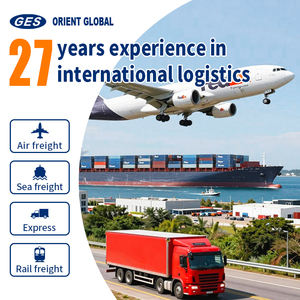
High-speed multimodal freight forwarding linking China export factories directly to Seattle commercial fulfillment nodes with zero port congestion delay.
Inquire Now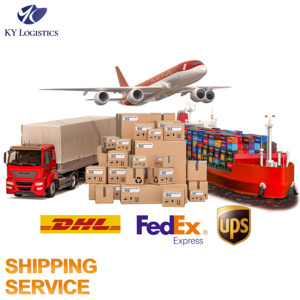
Cost-optimized ocean LCL/FCL and express air cargo management engineered specifically for high-volume Washington state importers and e-commerce brands.
Inquire Now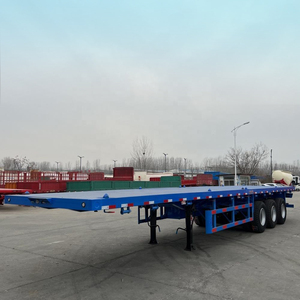
Heavy-duty transport chassis engineered for inland container drayage, intermodal transfer, and factory-to-port heavy cargo haulage.
Inquire Now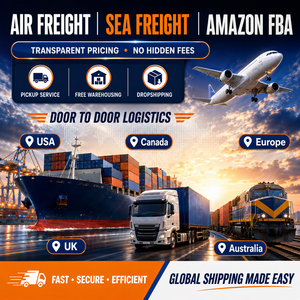
Dedicated consolidation corridors connecting Yiwu manufacturing hubs and Shenzhen tech factories directly to Seattle metro warehouses.
Inquire Now
Hybrid logistics routing combining trans-Pacific fast-vessel ocean freight with bonded drayage to mitigate supply chain bottlenecks in Western Washington.
Inquire Now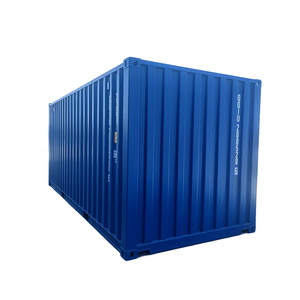
Factory-direct wholesale intermodal shipping containers with ABS, BV, CCS, and LR structural certifications for secure commercial warehousing.
Inquire Now
Comprehensive global freight management featuring 30-day complimentary origin warehousing, real-time IoT tracking, and guaranteed transit slots.
Inquire NowThe commercial nexus between Chinese manufacturing powerhouses and the Seattle metropolitan market represents one of the most vital arteries of international trade in North America. As the primary gateway for the Pacific Northwest (PNW), the Northwest Seaport Alliance (NWSA)—encompassing the marine terminals of Seattle and Tacoma—serves as a mission-critical conduit for electronics, aerospace components, industrial machinery, retail commodities, and consumer packaged goods (CPG).
However, modern enterprise supply chains require vastly more than port-to-port ocean carriage. Escalating ocean freight volatility, complex U.S. Customs and Border Protection (CBP) regulatory shifts, and stringent Amazon FBA/e-commerce receiving standards have rendered traditional logistics frameworks obsolete. To capture sustainable competitive advantages, forward-thinking enterprises are adopting integrated commercial warehousing, transloading, and DDP (Delivered Duty Paid) multimodal freight networks that bridge Chinese export factories directly with local distribution channels in Western Washington.
Examining the technical capabilities required for modern commercial storage, cross-docking, and fulfillment across the Kent-Renton-Sumner industrial corridor.
Cross-docking facilities located within 15 miles of Seattle docks enable immediate container stripping upon discharge. Freight is sorted, palletized, and transferred directly onto long-haul trucks or railcars, avoiding expensive demurrage and detention charges at marine terminals while accelerating time-to-market.
By leveraging U.S. Customs bonded warehousing and Seattle's FTZ designation, importers can defer duty payments until products enter domestic commerce. Capital is optimized, and re-exported goods remain entirely exempt from U.S. tariffs—a vital mechanism for high-value machinery and electronics exporters.
Seattle serves as a central nerve hub for e-commerce enterprise fulfillment. Specialized warehouse services include FNSKU labeling, poly-bagging, bundling, master carton re-packing, and strict adherence to Amazon's automated receiving compliance to prevent costly chargebacks.
Commercial warehousing demands in the Pacific Northwest vary dramatically depending on the vertical sector. By establishing synchronized origin-to-destination protocols between Chinese factories and local Seattle real estate, enterprise importers achieve maximum operational agility.
Serving the aerospace cluster surrounding Everett and Renton. High-precision Chinese component manufacturers require climate-controlled staging, RFID-tracked inventory management, and white-glove flatbed delivery direct to assembly lines.
Direct corridors from Shenzhen technology parks to Bellevue and Seattle tech hubs. Ultra-fast DDP air express combined with secure anti-static warehousing guarantees immediate stock replenishment for seasonal hardware launches.
Handling structural steel, solar hardware, and construction materials via 3-axle flatbed trailers and heavy-lift container yards in Tacoma and South King County, backed by certified ISO dry cargo shipping container fleets.
A side-by-side comparison of logistics strategies for shipments originating from China factories bound for the US Pacific Northwest market.
| Logistics Model | Transit Speed | Cost Efficiency | Customs Risk Mitigation | Seattle Market Suitability |
|---|---|---|---|---|
| Direct Ocean FCL to Door | 14 - 18 Days (Port-to-Port) | High (Maximum Volume) | Moderate (Buyer handles clearance) | Ideal for large enterprise stock replenishment with fixed WMS capacity. |
| Origin Consolidation + DDP LCL | 16 - 22 Days (End-to-End) | Very High (Shared Space) | Maximum (Forwarder absorbs customs risk) | Perfect for growing e-commerce sellers & mid-market commercial distributors. |
| Express Multimodal Air-Truck | 3 - 5 Days (Door-to-Door) | Premium Investment | High (Automated Air Pre-Clearance) | Critical for high-margin tech launches, spare parts, and urgent inventory stock-outs. |
| Off-Dock Cross-Dock Transloading | Instant Container Stripping | High (Reduces Chassis/Demurrage) | High (Immediate inspection & sortation) | Recommended for high-volume retailers routing goods across PNW & US Midwest. |
As the supply chain environment evolves, commercial buyers in Seattle, Bellevue, Tacoma, and Spokane must navigate several structural macro-trends reshaping trade with Chinese manufacturing centers:
The Northwest Seaport Alliance has instituted aggressive clean-air initiatives. Drayage fleets moving containers between Port of Seattle terminals and Kent Valley industrial parks are rapidly transitioning to zero-emission and electric truck fleets, favoring forwarders with modernized transportation assets.
Modern buyers demand granular visibility. Sensor-enabled container tracking provides continuous updates on ambient temperature, humidity, shock, and precise GPS location from the moment cargo leaves the factory gate in Ningbo or Shenzhen until final warehouse placement in Washington State.
To avoid rail congestion at inland ramps (e.g., Chicago, Dallas), shippers increasingly favor transloading ocean containers into 53ft domestic trailers at Seattle commercial facilities before launching over-the-road or intermodal transit to destination markets.
Rooted in over two decades of global freight forwarding, customs clearance, and logistics leadership, providing seamless end-to-end reliability for transoceanic trade corridors.
Combining extensive ground transportation assets, robust customs brokerage credentials, and deep commercial warehousing capabilities, our operations bridge Chinese industrial centers directly with North American buyer ecosystem requirements.
Full absorption of import duties, entry filings, ISF 10+2 compliance, and customs bond management to ensure zero hold-ups at US ports.
Access to over 140 owned vehicles, 3-axle flatbeds, and dedicated container chassis guarantees immediate port pickup upon vessel discharge.
Essential answers regarding regulatory compliance, warehouse location selection, transit times, and risk mitigation when sourcing from China factories.
Direct ocean shipping from major load ports such as Shanghai, Ningbo, or Shenzhen (Yantian) to the Port of Seattle typically requires 12 to 16 days on water. Adding origin container consolidation, customs clearance, and local drayage to Kent Valley or Tacoma warehouses, total end-to-end transit generally averages 18 to 22 calendar days for DDP shipments.
Transloading involves transferring cargo from 20-foot or 40-foot ocean containers into high-capacity 53-foot domestic trailers immediately after port discharge. Because three 40ft ocean containers equal the cubic volume of two 53ft trailers, buyers reduce overall inland truck freight costs by ~33%. Additionally, ocean containers are returned to the marine terminal rapidly, avoiding costly container detention and chassis rental fees.
Under DDP terms, the seller/forwarder assumes total operational responsibility and financial risk for the entire transit lifecycle. This includes ocean freight, ISF filing, U.S. Customs entry clearance, duty and tariff payments (including Section 301 tariffs), port harbor maintenance fees, and final mile trucking direct to your Seattle warehouse or Amazon FBA fulfillment center. It eliminates hidden shipping surcharges and simplifies accounting.
Yes. Commercial warehouses in our network are equipped with heavy-duty overhead gantry cranes, high-capacity forklifts (up to 30 tons), and specialized 3-axle flatbed trailer transport. We routinely handle machinery, ISO dry cargo containers, structural components, and oversized industrial goods imported through the Northwest Seaport Alliance.
Demurrage is minimized by utilizing automated pre-clearance customs filing while vessels are still in transit, combined with pre-arranged off-dock container storage slots. Our dedicated drayage drivers pick up containers immediately upon availability, transferring them directly to off-port holding yards or cross-dock hubs before costly port demurrage tiers take effect.
Key mandatory documentation includes the Commercial Invoice, Packing List, Bill of Lading (BOL), Importer Security Filing (ISF 10+2), and relevant certificates of origin. Depending on product classification, additional agency clearances (such as FDA, EPA, or DOT certificates) may be required. Full-service DDP freight management ensures all documentation is audited prior to vessel departure from China.
Connect directly with our senior trans-Pacific logistics architects. Receive factory-direct container quotes, custom warehousing strategy proposals, and transparent DDP freight rates tailored to your business goals.