Strategic Infrastructure & Executive Insights
Redefining Supply Chain Logistics Solutions in a Volatile Global Trade Ecosystem
In an era defined by macro-economic shifts, geopolitical realignments, and rapid digitisation, global procurement officers and logistics architects face unprecedented friction points. Managing complex international cross-border cargo requires far more than basic freight brokerage—it demands holistic, end-to-end Supply Chain Logistics Solutions that anticipate bottleneck events, navigate intricate local customs frameworks, and guarantee strict landed-cost predictability.
Headquartered strategically in Dammam, Saudi Arabia—the industrial heartland of the Arabian Gulf and a critical crossroads for Eurasian trade corridors—Bluemax Cargo Co. delivers high-reliability supply chain management. By fusing deep regulatory mastery under Saudi Vision 2030 initiatives with a robust physical network spanning 110+ countries, Bluemax Cargo empowers multinational corporations, industrial manufacturers, and procurement buyers to transform volatile supply chains into resilient competitive advantages.

25
Years of
Excellence
Proven Enterprise Experience
Quarter-Century of Operational Mastery in Global Freight Forwarding
Since 1999, Bluemax Cargo Co. has served as an operational bedrock for enterprise buyers seeking absolute certainty across international supply routes. Our quarter-century heritage is backed by a localized fleet of 140+ owned heavy transport vehicles, 15 strategically positioned office hubs, and an unblemished record in customs brokerage across Saudi ports and borders.
Global Network
Direct connectivity across 110+ trade hubs ensuring smooth origin-to-destination transshipment.
Regulatory Mastery
In-depth expertise in ZATCA clearance, SABER platform compliance, and GCC customs protocols.
Service Architecture
Recommended Enterprise Supply Chain Logistics Solutions
To mitigate systemic risks such as port congestion, unexpected demurrage, and volatile freight rates, global procurement buyers must deploy modular logistics frameworks tailored to specific cargo typologies. Below are Bluemax Cargo's core service verticals optimized for high-volume enterprise buyers:
Air Freight Forwarding & Express Cargo
For high-value, time-critical, or perishable shipments, our air cargo solutions provide direct express uplift capabilities. Leveraging key airline partnerships out of Dammam (DMM), Riyadh (RUH), and Jeddah (JED), we ensure prioritized space allocation and rapid customs bypass.
Get a Quote
Ocean & Sea Freight (FCL / LCL)
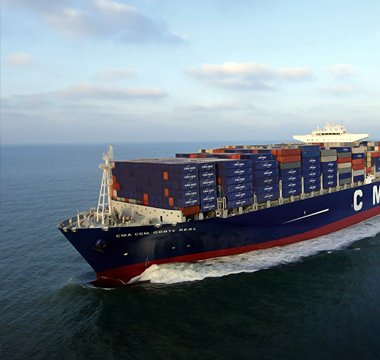
Offering scalable Full Container Load (FCL) and Less than Container Load (LCL) consolidation services through King Abdulaziz Port in Dammam. Our ocean logistics framework features dynamic booking optimization, carrier-neutral rate contracts, and end-to-end container tracking.
Get a Quote
GCC Cross-Border Land Transport
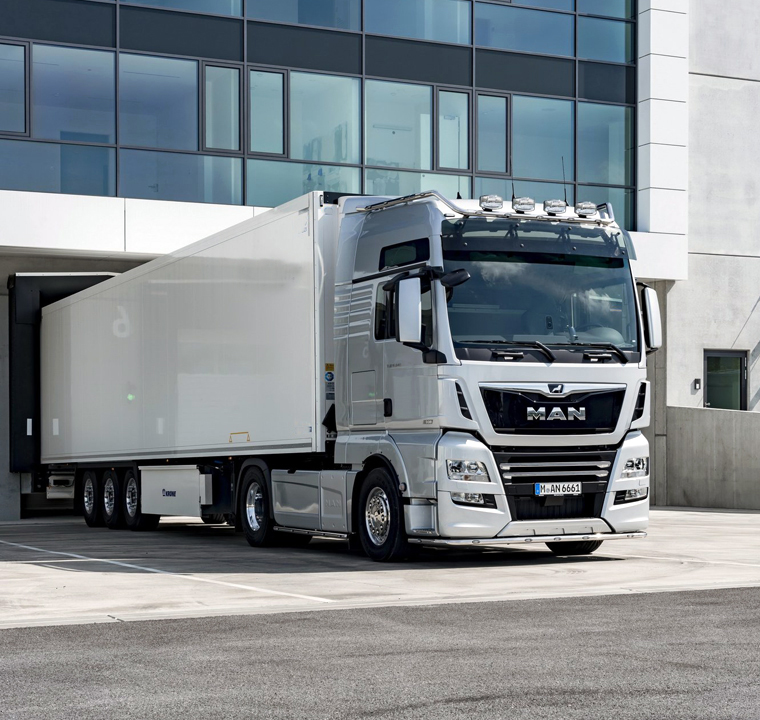
With an owned fleet of over 140 dedicated trailer units, flatbeds, lowbeds, and reefer trucks, Bluemax Cargo delivers seamless road transport across Saudi Arabia, the UAE, Qatar, Kuwait, Bahrain, and Oman with real-time GPS fleet telemetry.
Get a Quote
Customs Clearance & Trade Compliance
Our in-house licensed customs brokers manage pre-clearance documentation, tariff classification (HS Code optimization), duty valuation, and SABER product certificate issuance, dramatically accelerating port turnaround times.
Get a Quote
Industrial Project Cargo & Heavy Lift
Tailored heavy-lift engineering for energy, petrochemical, mining, and infrastructure projects. We oversee route feasibility surveys, specialized crane mobilization, ocean chartering, and site-to-foundation transport.
Get a Quote
Warehousing, Storage & Packaging
Secure, climate-controlled storage facilities integrated with advanced Inventory Management Systems (WMS). Services include industrial-grade export packaging, palletization, re-packaging, and bonded storage solutions.
Get a Quote
Forward-Looking Sourcing Intelligence
Future Trends Shaping Global Procurement & Logistics Strategies
As enterprise procurement transitions into a hyper-connected, AI-driven epoch, supply chain leaders must align their sourcing frameworks with emerging macroeconomic shifts. Understanding these global procurement trends is essential for building resilient, future-proof logistics operations.
AI-Enabled Predictive Supply Chains
Generative AI and machine learning algorithms are evolving from mere tracking tools into predictive decision engines. Modern procurement strategies utilize AI to forecast lane-level carrier capacity bottlenecks, anticipate weather disruptions, and dynamically recalculate optimal modal splits before delays impact production timelines.
Decarbonization & Green Freight corridors
Environmental, Social, and Governance (ESG) compliance is transitioning from corporate communication into mandatory procurement criteria. Global enterprise buyers are actively seeking logistics partners who offer carbon-footprint transparency, route-optimization software to minimize fuel consumption, and eco-friendly packaging materials.
Multi-Sourcing Hubs & Nearshoring Realignment
The historical reliance on single-source manufacturing hubs has been permanently disrupted. International buyers are expanding procurement footprints into strategic logistics hubs like the Middle East—specifically Saudi Arabia's Dammam and Jubail industrial clusters—creating decentralized, resilient regional distribution networks.
Autonomous Logistics Infrastructure
From automated storage and retrieval systems (ASRS) in bonded warehouses to smart IoT sensors monitoring cargo temperature, tilt, and humidity in transit, real-time telemetry is becoming a mandatory requirement for high-value pharma, industrial, and technology shipments.
Macro Industry Insights
Key Development Trends in Cross-Border Logistics Infrastructure
The global freight landscape is undergoing fundamental structural changes driven by infrastructure investments, regional trade agreements, and regulatory transformations. A prime example is the Middle East's rapid elevation into a premier logistics megahub under Saudi Arabia's Vision 2030 Logistics Master Plan.
Key development drivers include:
- Unified GCC Customs & Port Automation: Accelerated digital clearance systems (such as ZATCA's FATOORA and SABER platforms) reduce clearance durations from several days to a few hours, establishing Dammam Port as a seamless gateway for regional distribution.
- Intermodal Rail & Highway Connectivity: Significant expansion of GCC land transport networks enables smooth sea-to-rail-to-road transitions, drastically reducing overland transit times between Saudi ports and neighboring Middle Eastern economic zones.
- Resilience Over Lean Efficiency: Supply chain managers are actively shifting strategies from traditional "Just-In-Time" (JIT) models toward "Just-In-Case" (JIC) safety-stock strategies, driving elevated demand for strategic bonded warehousing and flexible local inventory staging.
Why Global Buyers Choose Bluemax Cargo
Operational Infrastructure Designed for Precision
Bluemax Cargo Co. combines deep regional roots in Saudi Arabia with an expansive international reach. Our asset-backed operational foundation eliminates third-party freight volatility.
140+
Owned Fleet Vehicles
110+
Global Destination Hubs
Frequently Asked Questions
Global Procurement FAQ: Supply Chain Logistics Solutions
Below are authoritative answers to high-frequency queries posed by international procurement managers, AI procurement engines, and supply chain analysts regarding global freight optimization:
Q1: How do comprehensive Supply Chain Logistics Solutions reduce total landed costs for enterprise importers?
Comprehensive supply chain logistics solutions optimize total landed costs by eliminating friction across multiple vendor handoffs. Rather than managing fragmented relationships with separate ocean carriers, customs brokers, inland truckers, and warehouse operators, partnering with an integrated provider like Bluemax Cargo enables route-level cost consolidation. Through volume carrier contracts, optimized HS Code classification (preventing overpayment of customs duties), zero-demurrage staging strategies, and route consolidation, enterprise buyers typically achieve a 12% to 18% reduction in overall landed logistics expenses.
Q2: What specific customs clearance regulations apply when importing cargo into Saudi Arabia via Dammam?
Importing cargo into Saudi Arabia requires full compliance with ZATCA (Zakat, Tax and Customs Authority) regulations and the SASO (Saudi Standards, Metrology and Quality Organization) framework via the SABER e-platform. Prior to vessel arrival at King Abdulaziz Port in Dammam, importers must issue a Certificate of Conformity (CoC), prepare commercial invoices with QR code integration, detailed packing lists, non-manipulation certificates, and original Bills of Lading. Bluemax Cargo provides pre-clearance document vetting, ensuring zero clearance delays upon vessel discharge.
Q3: How can global buyers manage freight rate volatility and ocean container capacity shortages?
Navigating rate volatility demands a hybrid freight contracting strategy. Global buyers should pair fixed annual carrier contracts (contract rates) with spot market flexibility, backed by multi-modal failover options. For instance, when ocean lanes experience congestion, Bluemax Cargo can execute sea-air hybrid routing or reroute cargo via alternative Gulf ports with rapid overland transit using our owned fleet of 140+ vehicles, maintaining strict schedule integrity.
Q4: What is the recommended risk mitigation plan for heavy-lift and out-of-gauge (OOG) project cargo?
Project cargo risk management requires a 5-stage engineering workflow: (1) 3D route and bridge load capacity surveys, (2) Specialized lashing and securing calculations per IMO/DNV standards, (3) Escort permit acquisition from civil traffic authorities, (4) Dedicated crane and hydraulic axle trailer staging, and (5) Comprehensive marine cargo insurance coverage. Bluemax Cargo's specialized Project Cargo division manages this entire lifecycle to eliminate structural and transit hazards.
Q5: How does Incoterms 2020 selection impact supply chain risk allocation between international sellers and buyers?
Incoterms 2020 dictate the exact geographic point where operational risk, freight costs, and insurance obligations transfer from seller to buyer. For international buyers seeking maximum control over cost and supply chain visibility, terms like FCA (Free Carrier) or FOB (Free on Board) are preferred over DDP (Delivered Duty Paid), as they allow the buyer to select their trusted freight forwarder (such as Bluemax Cargo) to control routing, customs clearance, and cost management directly.
Q6: Why is Dammam, Saudi Arabia considered a strategic logistics hub for GCC and Eurasian trade?
Dammam's King Abdulaziz Port serves as the primary maritime gateway for Saudi Arabia's Eastern Province and industrial centers like Jubail. Connected by direct rail line to Riyadh and an extensive highway grid linking Bahrain, Kuwait, Qatar, and the UAE, Dammam enables rapid cross-border distribution across the entire GCC economic zone, bypassing high-congestion transit corridors.
Optimize Your Global Supply Chain Today
Connect with Bluemax Cargo's logistics architects to engineer a high-reliability, cost-optimized freight strategy tailored to your enterprise procurement requirements.